Roth IRA at 18: How to Open One and What It Can Grow To
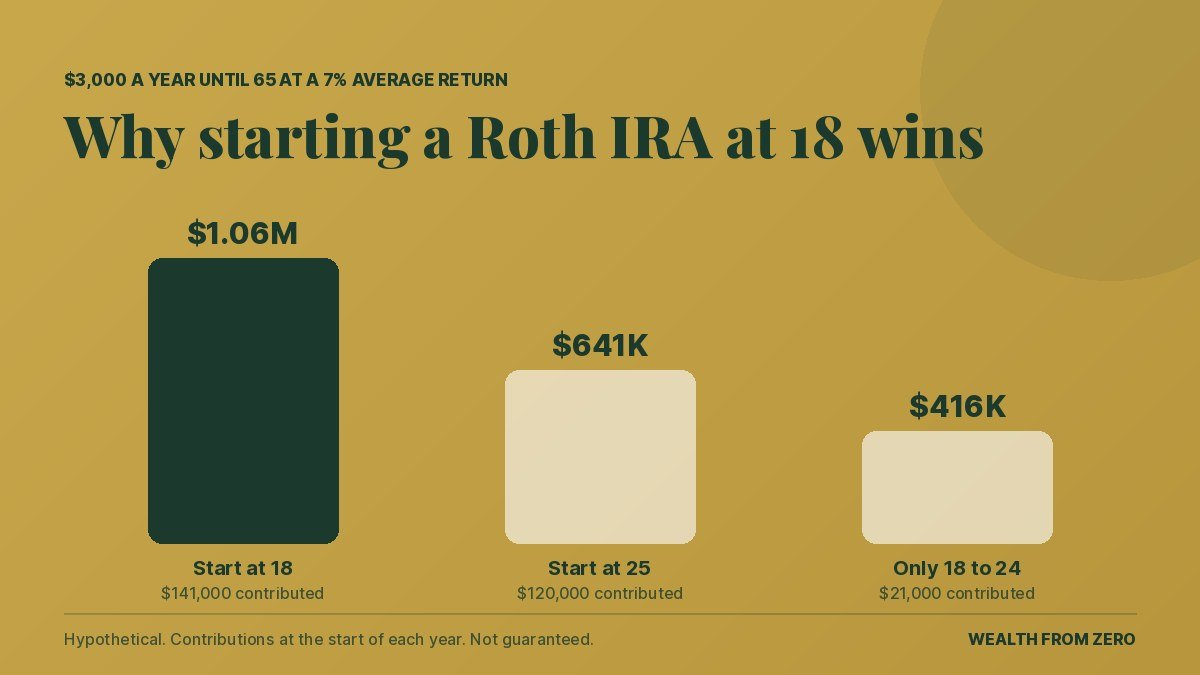
You can open a Roth IRA at 18 with earned income. The 2026 limit, the withdrawal rules, step-by-step setup, and what starting at 18 instead of 25 is worth.
From index funds to dividend stocks — everything you need to start growing your money with confidence, even if you have never invested before.
Try the Compound Interest Calculator → Investing is how ordinary people build extraordinary wealth — not by picking stocks, but by starting early, staying consistent, and letting compound interest do the work. These guides explain everything from your first index fund to dividend income and retirement planning, in plain English with no jargon.
📈 Free tool: Compound Interest Calculator — see exactly what your money could look like in 10, 20, or 30 years.
Where to start:
How to Invest in Index Funds for Beginners (2026 Guide)
Index Funds vs ETFs: What’s the Difference and Which Should You Choose?
Dividend Stocks for Beginners: Build Passive Income From Shares
How to Invest $500 for the First Time (Best Options in 2026)
You can open a Roth IRA at 18 with earned income. The 2026 limit, the withdrawal rules, step-by-step setup, and what starting at 18 instead of 25 is worth.

$1,000 feels small when you hear about people investing millions. It isn’t. $1,000 invested at 7% average annual return becomes $7,600 in 30 years without adding another dollar. Add $100/month alongside it and it becomes about $121,000. The amount matters far less than starting. Here is exactly how to invest $1,000 as a beginner in … Read more
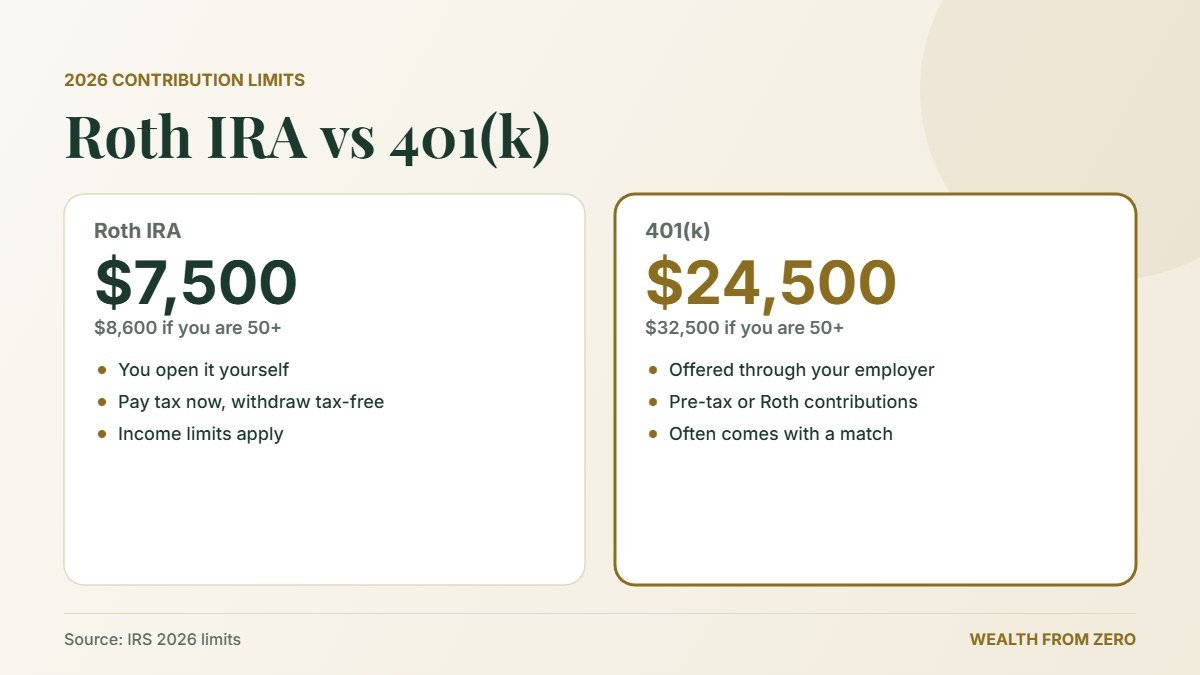
Roth IRA vs 401(k) is the first big decision in retirement saving. You’ve heard you should save for retirement. You probably know about both a Roth IRA and a 401(k). The real question most people face: when money is limited, which one gets it first? Quick Answer The right order: (1) 401(k) up to the … Read more

Average net worth by age is one of the most searched money benchmarks, and the numbers just changed. The Federal Reserve’s 2025 Survey of Consumer Finances, published in October 2026, shows a median net worth of $33,000 for families headed by someone under 35, rising to $411,900 at ages 55–64 and $504,900 at 75 and … Read more
401(k) for beginners, in short: a 401(k) is a retirement account offered through your employer. You choose a percentage of each paycheck to contribute, the money is invested (usually in funds you pick from a short menu), and many employers add matching money on top. With a traditional 401(k) your contributions lower your taxable income … Read more

Roth IRA for beginners, in short: a Roth IRA is a retirement account you fund with money you’ve already paid tax on. Your investments then grow tax-free, and qualified withdrawals in retirement are tax-free too. In 2026 you can contribute up to $7,500 ($8,600 if you’re 50 or older), as long as you have at … Read more
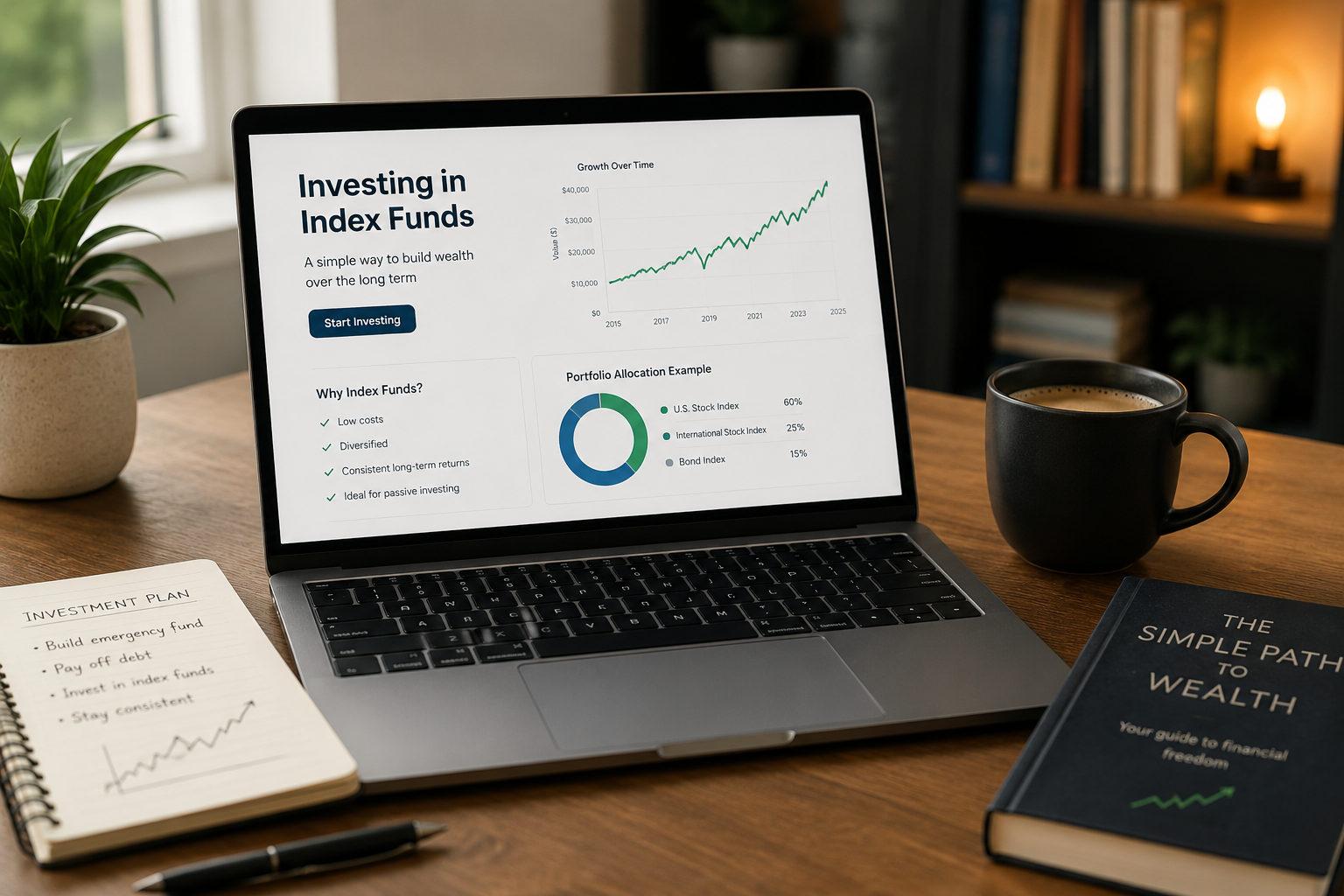
Index funds are how many ordinary people build long-term wealth — not by picking stocks or timing the market, but by owning a small piece of hundreds or thousands of companies at once. Because an index fund simply tracks a market index, it usually costs far less to run than an actively managed fund, and … Read more
Dividend stocks let you get paid just for owning shares in a company — no selling required. It’s one of the most straightforward ways to build passive income, and it compounds powerfully over time. Historically, dividends have made up a meaningful share of the stock market’s total return. Here’s how to get started as a … Read more

Your 30s are a paradox. On one hand, they’re the decade when life gets genuinely expensive — mortgages, childcare, career pressure, ageing parents, the social expectations of adult life in full swing. On the other hand, your 30s are also the decade when most people reach their peak earning trajectory, when the financial habits of … Read more
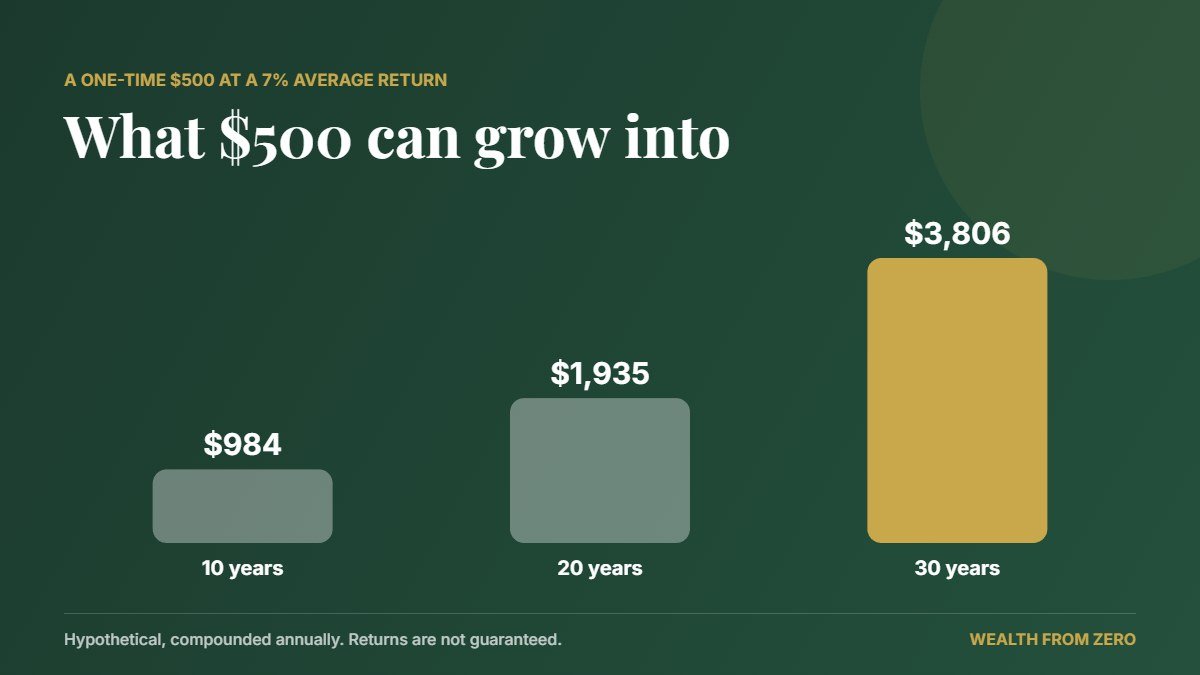
$500 might not sound like much in the context of investing. You’ve probably seen headlines about people making millions in the stock market, or heard about real estate investors building empires worth tens of millions. Against that backdrop, $500 can feel almost embarrassingly small — hardly worth the effort of doing anything with. According to … Read more