
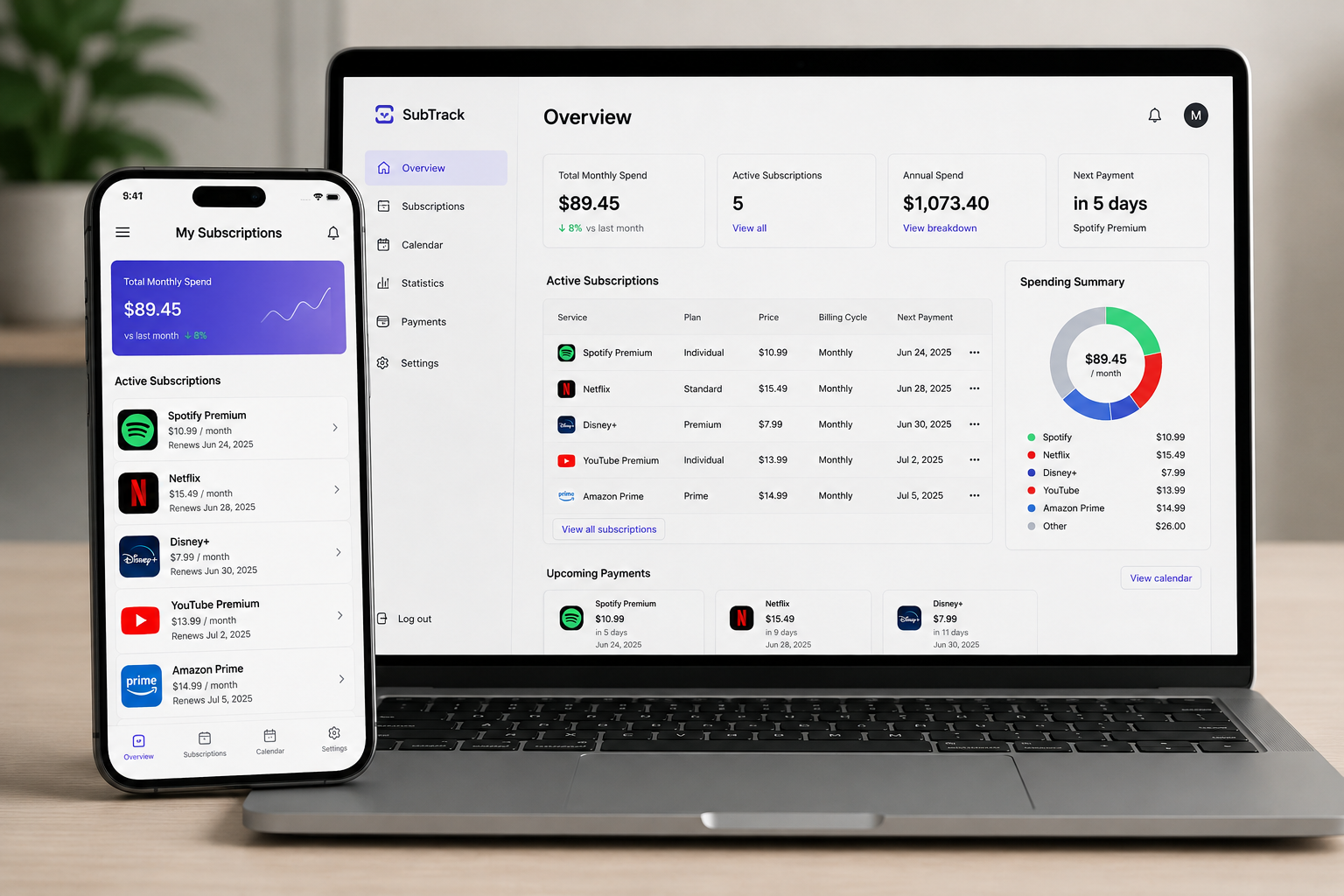
Learning how to save money on subscriptions is one of the quickest wins available in personal finance. Unlike cutting your grocery bill or reducing your rent — which require significant planning and lifestyle changes — auditing and reducing your subscriptions can be done in an afternoon and can generate immediate, ongoing savings every single month.
The problem is that subscriptions are specifically designed to be invisible. They charge small amounts automatically, rarely require any action from you, and are easy to forget about entirely. This is the subscription economy’s most powerful feature — and your biggest financial vulnerability.
The average person today pays for far more subscriptions than they realize. Streaming services, music platforms, gym memberships, app subscriptions, software tools, meal kit deliveries, beauty boxes, news sites, cloud storage, gaming services — the list is endless and the cumulative cost is often shocking when tallied up.
This guide will show you exactly how to audit your subscriptions, identify what to cut, negotiate better deals on what you keep, and build a system to prevent subscription creep from returning in the future.
The True Cost of Subscription Creep
| Subscription | Monthly Cost | Annual Cost | Cancel if Unused? |
|---|---|---|---|
| Netflix (Standard) | $15.49 | $185.88 | ✅ Yes |
| Spotify (Individual) | $11.99 | $143.88 | ✅ Yes |
| Amazon Prime | $14.99 | $179.88 | ⚠️ If you use shipping |
| Disney+ | $7.99 | $95.88 | ✅ Yes |
| Gym Membership | $30–$80 | $360–$960 | ✅ If under 2x/week |
| Cloud Storage | $2.99–$9.99 | $36–$120 | ⚠️ Usually worth it |
Most people pay for at least one subscription they barely use. Redirect that money toward your savings goal or investing instead.
Subscription creep is the gradual accumulation of small recurring charges that individually seem insignificant but collectively drain a substantial amount from your monthly budget.
Consider a typical subscription situation: Netflix ($15), Spotify ($10), Amazon Prime ($15), Disney+ ($9), a gym membership ($30), iCloud storage ($3), a news site ($10), a meal kit delivery ($60), a fitness app ($10), and a VPN service ($5). That’s $167 per month — $2,004 per year — on subscriptions alone.
For many people, the actual total is even higher. A 2022 survey by C+R Research, reported by CNBC, found that consumers underestimate their monthly subscription spending by an average of nearly $133. People think they’re spending around $86 per month on subscriptions when they’re actually spending closer to $219.
The reason for this disconnect is the nature of subscriptions themselves. Small monthly charges — $3 here, $8 there — feel negligible in isolation. But aggregated across all your subscriptions and multiplied by twelve, the annual total is often a genuine financial shock.
Step 1: Conduct a Full Subscription Audit
The first step to saving money on subscriptions is finding out exactly what you’re paying for. This requires going through your bank statements and credit card bills line by line for the past three months.
Look for any recurring charge — weekly, monthly, quarterly, or annual — and list every one you find. Include the name of the service, the amount, and the frequency of the charge.
Don’t rely on memory for this exercise. Many subscriptions are forgotten entirely until you see them on a bank statement. Annual subscriptions in particular are easy to forget — you signed up last year, the renewal processed automatically, and you’ve been paying for something you haven’t used in months.
Once you have your complete list, you now know exactly what your subscription spending is — probably for the first time.
Step 2: Categorize Each Subscription
With your complete list in hand, categorize each subscription into one of three groups:
Essential: Subscriptions you use regularly and genuinely value. These stay — but you’ll review them for better deals in Step 4.
Non-essential but used: Subscriptions you use occasionally but could live without. These are candidates for cancellation or downgrading.
Non-essential and rarely or never used: Subscriptions you’ve forgotten about, don’t use, or signed up for a trial and never canceled. These should be canceled immediately.
Be brutally honest in this categorization. “I might use it” is not the same as “I use it.” If you haven’t used a subscription in the past month, it belongs in the third category.
Step 3: Cancel Everything You Don’t Regularly Use
Once you’ve identified the subscriptions you don’t use, cancel them immediately — today, not next month. Every day you delay is money spent on something that provides you no value.
Canceling subscriptions is often deliberately made difficult by companies. They may require you to call rather than cancel online, bury the cancellation option deep in account settings, or offer retention deals to dissuade you. Stay firm. If you haven’t been using the service, no retention offer changes the fundamental fact that it isn’t worth your money.
A useful tactic: set a timer and commit to canceling all non-essential subscriptions within the next 30 minutes. The urgency prevents procrastination from setting in.

Step 4: Negotiate Better Deals on What You Keep
For subscriptions you’ve decided to keep, investigate whether you’re getting the best possible deal.
Annual vs monthly billing: Most subscription services offer a significant discount for paying annually rather than monthly. If you’re certain you’ll use a service for the next year, switching to annual billing typically saves 15-20%.
Family or group plans: Many streaming services offer family or group plans that allow multiple users to share a single subscription at a lower per-person cost. If you can share with family members or trusted friends, the savings are significant.
Student or senior discounts: Many services offer reduced rates for students, seniors, or other specific groups. If you qualify, always ask.
Loyalty discounts: If you’ve been a customer for a long time, call and ask for a loyalty discount. Many companies will offer reduced rates to retain existing customers rather than lose them. This works particularly well for gym memberships, internet providers, and cell phone plans.
Downgrade your plan: Do you actually use all the features of the plan you’re on? Streaming services often have cheaper tiers with limited screens or lower video quality. If you only watch on one device and don’t need 4K, a lower tier might serve you perfectly well at a fraction of the cost.
Step 5: Implement a Subscription Rotation Strategy
Rather than paying for multiple streaming services simultaneously — even at reduced rates — consider rotating them. Watch everything you want on Netflix for one month, then cancel and subscribe to Disney+ for the next month, then move to another service.
This rotation strategy means you’re never paying for more than one streaming service at a time, but you still have access to all the content you want — just not simultaneously. For people who aren’t watching multiple services at once anyway, this can cut streaming costs by 60-70%.
Step 6: Use Free Alternatives Where Possible
For many paid subscriptions, free or lower-cost alternatives exist that provide comparable value:
Music: Spotify free tier (with ads), YouTube Music free tier, or your local library’s free music streaming service
News: Most major newspapers allow a limited number of free articles per month. Rotating between publications or using Google News provides access to news content without paying for a subscription
Fitness: YouTube has thousands of free workout videos covering every fitness level and style. Free outdoor exercise — running, cycling, bodyweight training — costs nothing
Cloud storage: Google Drive, iCloud, and OneDrive all offer free tiers that are sufficient for most people’s needs
Software: Many premium software tools have free alternatives or open-source equivalents that provide similar functionality
Step 7: Set Up a Subscription Tracking System
The goal of this exercise isn’t just to save money today — it’s to prevent subscription creep from quietly rebuilding over the coming months and years.
Set up a simple subscription tracking system:
Create a document or spreadsheet listing every active subscription, the monthly cost, the renewal date, and whether it’s on a free trial. Review this document monthly alongside your bank statement.
Set calendar reminders one week before any free trial ends so you can decide consciously whether to continue or cancel before being charged.
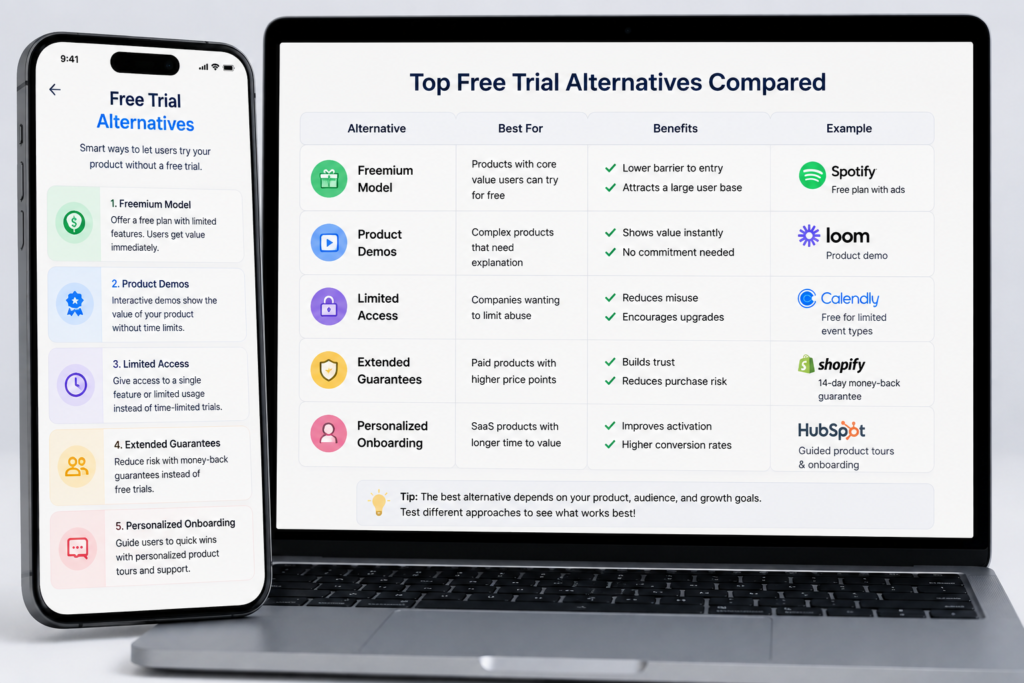
Treat free trials with the same skepticism as paid subscriptions. Only sign up for trials you intend to evaluate seriously, and set a reminder to cancel immediately after signing up so you don’t forget.
Step 8: Apply the One-In-One-Out Rule
Going forward, implement a one-in-one-out rule for subscriptions: before adding any new subscription, cancel an existing one of equal or greater value.
This rule prevents the gradual accumulation of subscriptions that leads to subscription creep in the first place. It forces you to make conscious trade-offs — “is this new service worth more to me than the one I’d cancel to afford it?” — rather than simply adding subscriptions without removing anything.
How Much Can You Save?
The savings from auditing and reducing subscriptions vary enormously depending on how many subscriptions you currently have and how many you choose to cancel or downgrade.
For someone with $150-200 per month in subscriptions, eliminating unused services and negotiating better deals on the rest can realistically reduce spending to $60-80 per month — a saving of $70-140 per month, or $840-1,680 per year.
Applied to your budget alongside the 50/30/20 budget rule, this saving can meaningfully accelerate progress toward financial goals — whether that’s building your emergency fund, paying off debt, or increasing your investment contributions.
Want to see how quickly your savings can grow? Use our Savings Goal Calculator to calculate how much you need to save each month to reach your goal.
Related: How to save $1,000 in 3 months: a week-by-week plan
Frequently Asked Questions
Below are the most common questions people ask about how to save money on subscriptions — answered simply and clearly.
How do I find subscriptions I’ve forgotten about?
Go through your bank and credit card statements for the past three months line by line. Look for any recurring charge, no matter how small. Also check your email for subscription confirmation or renewal emails — searching for terms like “subscription,” “renewal,” “billing,” and “receipt” often surfaces forgotten services.
Is it worth calling to cancel rather than canceling online?
Sometimes, yes. Companies often offer retention deals — a discounted rate, a free month, or an upgrade — to customers who call to cancel. If you’re on the fence about keeping a service, calling gives you the opportunity to negotiate a better deal before committing to cancellation.
What if a subscription auto-renewed without my knowledge?
Contact the company immediately and request a refund. Many companies will refund a recent auto-renewal, particularly if you can demonstrate you haven’t used the service since the renewal date. If the company refuses, dispute the charge with your bank or credit card provider.
Should I share streaming accounts with friends or family?
Sharing accounts must comply with each service’s terms of use. Many streaming services have introduced restrictions on account sharing in recent years. Check the current terms of any service before sharing — terms change frequently and what was permitted a year ago may no longer be allowed.
How often should I audit my subscriptions?
A full subscription audit once every six months is sufficient for most people. Additionally, reviewing your bank statement monthly and flagging any new recurring charges ensures subscription creep doesn’t quietly rebuild between full audits.
Sources
- C+R Research subscription survey (2022), as reported by CNBC.
- Federal Trade Commission, Getting In and Out of Free Trials, Auto-Renewals, and Negative Option Subscriptions.