
Flipping items for profit is one of the oldest side hustles in existence — and in the age of online marketplaces, it’s more accessible and potentially more lucrative than ever. The basic concept is simple: buy something for less than you can sell it for, and pocket the difference. Buy low, sell high.
What makes flipping particularly appealing as a side hustle is its low barrier to entry. You can start with as little as $20-50, work as many or as few hours as you want, and scale up as your knowledge and capital grow. Unlike many side hustles, flipping doesn’t require any particular skills or qualifications to get started — just an eye for value and a willingness to learn.
This guide covers everything you need to know to start flipping items for profit, from finding your first products to maximizing your selling price and scaling into a serious income stream.
What Is Item Flipping?
| Item Category | Typical Flip Profit | Best Selling Platform | Difficulty |
|---|---|---|---|
| Electronics (phones, laptops) | $20–$200/item | eBay, Facebook Marketplace | Medium |
| Furniture | $30–$300/item | Facebook Marketplace, Craigslist | Low |
| Clothing / Vintage | $10–$150/item | Depop, Poshmark, eBay | Low |
| Books / Textbooks | $5–$50/item | Amazon, eBay, BookScouter | Very Low |
| Sports Equipment | $20–$200/item | Facebook Marketplace, OfferUp | Low |
| Vintage / Collectibles | $50–$1,000+/item | eBay, Etsy | High (expertise needed) |
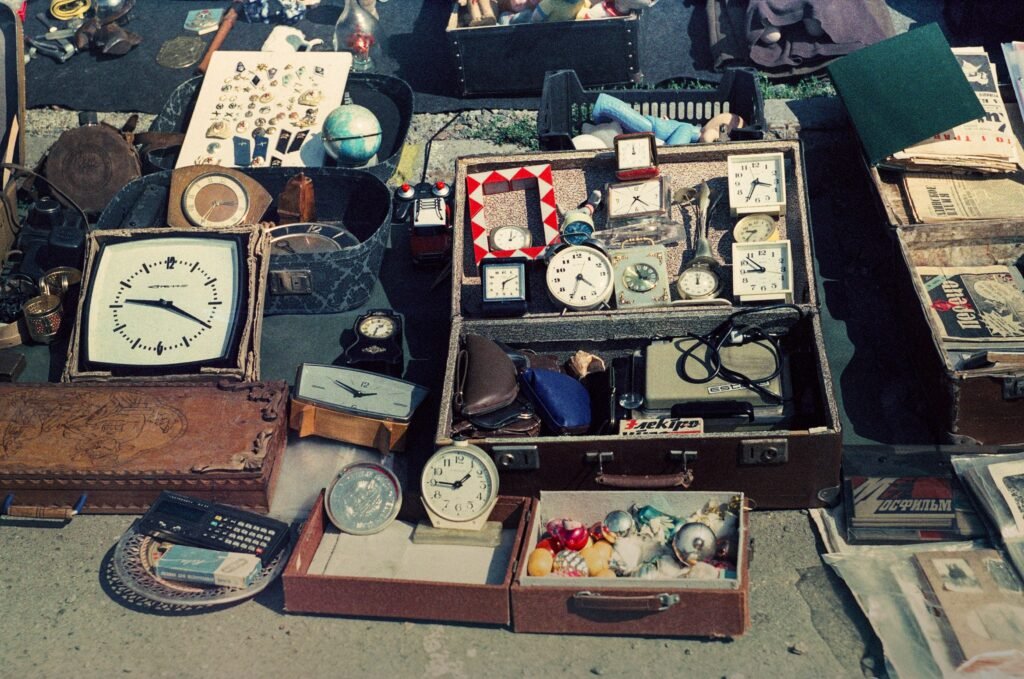
Item flipping means buying undervalued items — at thrift stores, yard sales, garage sales, online marketplaces, or retail clearance — and reselling them at a higher price through platforms like eBay, Facebook Marketplace, Depop, Vinted, or Craigslist.
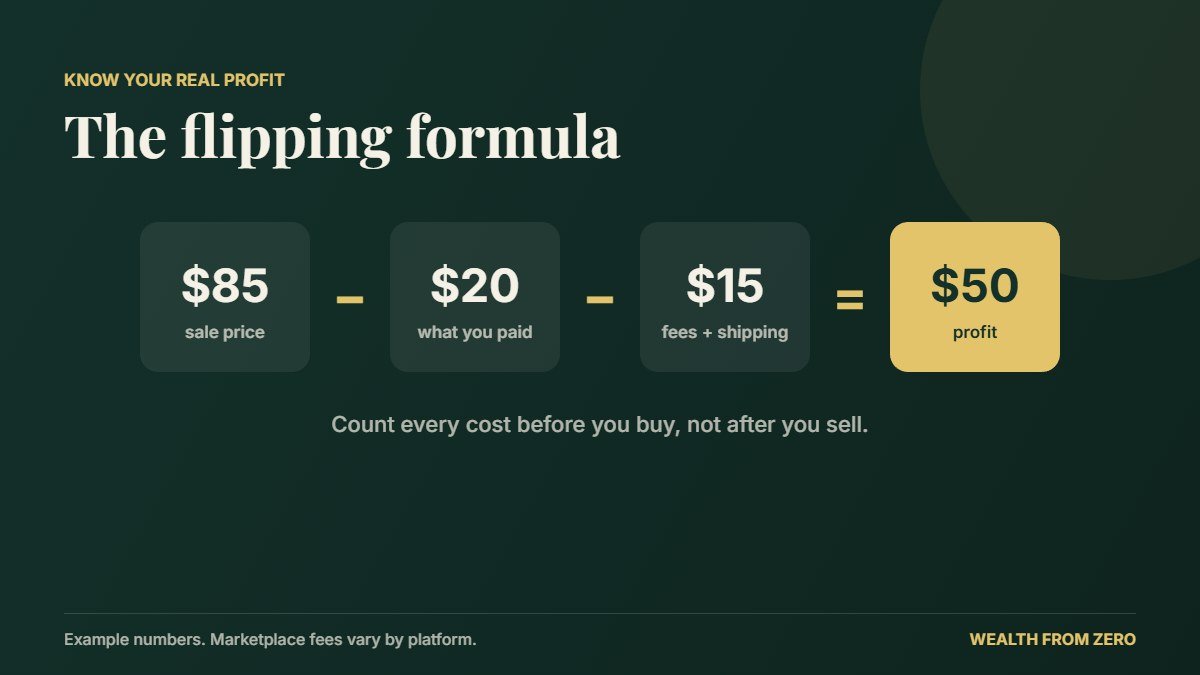
The profit comes from the gap between what you pay and what you sell for, minus any costs like platform fees, shipping, and cleaning or minor repairs.
Flipping can involve almost any category of physical goods — furniture, clothing, electronics, books, vinyl records, antiques, sports equipment, tools, toys, and more. The best flippers tend to develop deep knowledge in one or two specific niches where they can consistently spot value that others miss.
Why Flipping Works as a Side Hustle
Flipping has several characteristics that make it an excellent side hustle for beginners:
Low startup costs. You can start flipping with whatever money you have available. Many successful flippers started with $20-50 and built their capital over time through reinvesting profits.
Flexible hours. You can flip as much or as little as you want. Source items at the weekend, list them during evenings, and ship when convenient. There’s no schedule to adhere to.
Scalable. Once you understand a niche and have built up capital, you can scale your operation significantly. Some flippers turn their side hustle into a full-time business generating $5,000-20,000 per month.
Low risk. Unlike many businesses, flipping doesn’t require significant upfront investment in stock. You can test different niches with small amounts before committing more capital.
Immediate cash flow. Unlike investing, where returns come over years, flipping can generate cash quickly — sometimes within days of buying an item.
Step 1: Choose Your Niche
The most successful flippers don’t try to flip everything. They develop deep expertise in one or two specific categories where they can consistently identify undervalued items and know what they’re worth on the resale market.
Choosing the right niche is one of the most important decisions you’ll make as a flipper. Here are some of the most popular and profitable flipping niches:
Furniture
Old, well-made furniture — particularly solid wood pieces — can often be bought cheaply at thrift stores or garage sales and resold for significant profit, sometimes with a little cleaning or minor restoration. Furniture is one of the highest-profit niches in flipping, but it requires transport capacity and physical storage space.
Clothing and Fashion
Vintage clothing, designer items, and branded sportswear are consistently in demand on platforms like Depop, Vinted, and eBay. The key is learning to recognize valuable brands and styles — a piece of vintage Levi’s or a rare Nike colorway can be worth ten times what it costs at a thrift store.
Electronics
Broken or faulty electronics — phones, laptops, gaming consoles — can often be bought cheaply and resold either repaired or for parts at a significant profit. This niche requires some technical knowledge but can be very lucrative.
Books and Vinyl Records
First editions, out-of-print books, and rare vinyl records can be found at thrift stores and yard sales for pennies and resold for significant amounts. Apps like BookScouter and Discogs allow you to check resale values instantly before buying.
Tools and Equipment
Quality tools — branded power tools, garden equipment, specialist instruments — hold their value well and are regularly sold cheaply at estate sales and garage sales by people who don’t know what they’re worth.
Toys and Collectibles
Vintage toys, action figures, trading cards, and collectibles can be extremely valuable. This niche requires specialist knowledge but can yield extraordinary profits on individual items.
The best niche for you is one that intersects your existing knowledge with consistent sourcing opportunities in your area. If you know fashion, start with clothing. If you’re technically minded, try electronics. If you have a van, furniture might be ideal.
Step 2: Learn to Source Profitably
Sourcing is the most important skill in flipping. Your ability to find undervalued items consistently determines how profitable your flipping business will be.
The best sourcing locations include:
Thrift stores and thrift stores
Thrift stores are the classic starting point for flippers. Prices are often very low, stock changes frequently, and the range of items is enormous. The key to thrift store success is visiting regularly — ideally multiple times per week — and being one of the first to see new stock.
Yard sales and garage sales
Yard sales and garage sales are treasure troves for flippers. Sellers are typically private individuals clearing out their homes, often with no idea of the value of what they’re selling. Arriving early gives you the best selection.
Facebook Marketplace and Gumtree
Online classifieds are excellent sourcing platforms because sellers often price items to sell quickly rather than at market value. Searching for specific items in your niche, setting up alerts, and being responsive can get you great deals.
Estate sales
Estate sales — where the entire contents of a house are sold, often after a death or major life change — can yield exceptional finds at low prices, particularly for furniture, antiques, tools, and collectibles.
Retail clearance and liquidation
Buying heavily discounted retail stock — end-of-line clearance, returned goods, or liquidation pallets — and reselling at full market price can be very profitable. Liquidation.com and similar platforms sell returned Amazon and retail stock in bulk.
Step 3: Research Before You Buy
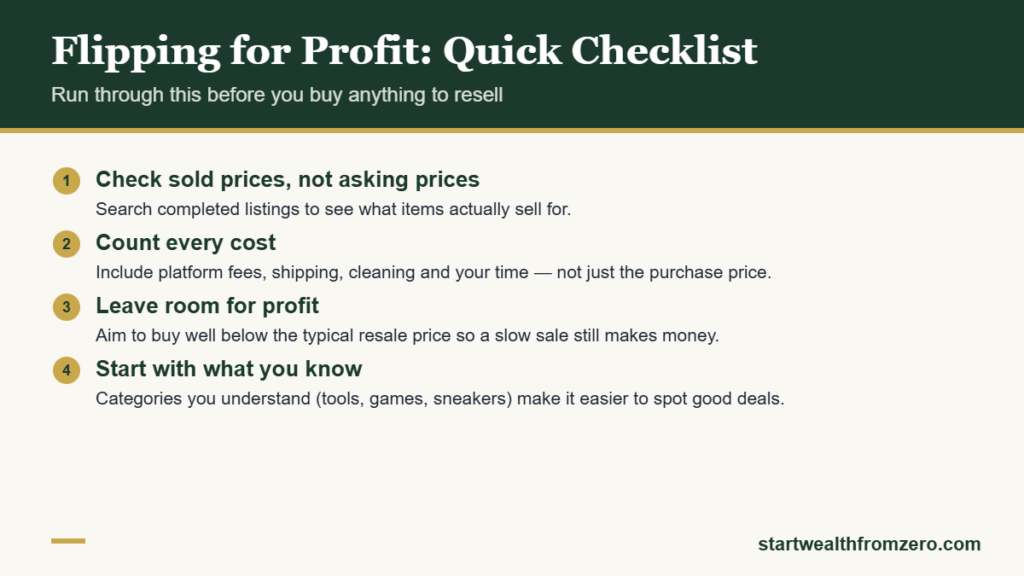
The golden rule of flipping is: never buy without researching the resale value first. Buying an item because it “looks valuable” without checking what it actually sells for is one of the most common and costly beginner mistakes.
Before buying anything, check completed sales (not just listed prices) on eBay — eBay’s “Sold Items” filter shows what items have actually sold for recently, which is far more useful than what people are asking.
For books, use BookScouter to check prices across multiple buyback platforms instantly. For vinyl records, check Discogs. For electronics, check eBay sold listings and platforms like Swappa or Back Market.
The key metric is not the listing price but the sold price. Items can be listed at any price — what matters is what buyers are actually paying.
Calculate your potential profit before buying:
- Resale price (based on sold comps) minus cost of item, minus platform fees (typically 10-15%), minus shipping costs, minus any cleaning or repair costs = your actual profit
If the margin is less than 30-40%, the item may not be worth the time and effort involved.
Step 4: Choose the Right Selling Platforms
Different platforms work better for different types of items. Understanding which platform to use for each category of item is an important skill for maximizing your selling price.
eBay
The largest online marketplace for secondhand goods. Works well for almost any category, particularly electronics, collectibles, books, records, and branded clothing. eBay’s auction format can drive up prices on desirable items, while the fixed-price format works well for items with a clear market value.
Facebook Marketplace
Best for large items that are difficult to ship — furniture, large appliances, gym equipment. Buyers collect in person, eliminating shipping costs and complications. Facebook Marketplace has no listing fees, making it very profitable for items that sell locally.
Depop and Vinted
Fashion-focused platforms with large, engaged audiences for vintage clothing, streetwear, and branded fashion. Depop skews toward a younger audience interested in vintage and unique pieces. Vinted is stronger for everyday branded clothing.
Etsy
Best for vintage items (20+ years old), handmade goods, and craft supplies. Etsy buyers are willing to pay premium prices for genuine vintage pieces.
Craigslist (US)
Similar to Facebook Marketplace — best for large local items sold without shipping.
Many experienced flippers list the same item on multiple platforms simultaneously to maximize visibility and speed of sale.
Step 5: Present Your Items Professionally
The way you present items for sale has a significant impact on the price you achieve. Two identical items listed differently can sell for very different amounts.
Photography
Good photos are the single most important factor in your listing’s success. Use natural light where possible, photograph items against a clean neutral background, and take multiple images from different angles including any flaws or damage. Buyers can’t physically inspect your items — your photos are everything.
A smartphone with a decent camera is sufficient. You don’t need expensive equipment — just good light, a clean background, and care in composition.
Titles and descriptions
Your listing title should include the brand, model, size, color, and condition — all the information a buyer might search for. Your description should be honest and detailed, covering condition accurately and noting any flaws. Honest descriptions reduce disputes and returns.
Pricing
Price competitively based on your research into sold comps. Pricing too high means slow sales. Pricing too low leaves money on the table. Many flippers price slightly above the average sold price and accept that some items will require a reduction before selling.
Step 6: Handle Shipping Professionally
Efficient, professional shipping is essential for maintaining good seller ratings and avoiding disputes. Here are the key principles:
Pack items carefully to prevent damage in transit. Use appropriate packaging — bubble wrap for fragile items, poly bags for clothing, sturdy boxes for electronics.
Always use tracked shipping for items above $20 in value. Without tracking, you have no recourse if a buyer claims non-delivery.
Print shipping labels online through Royal Mail, USPS, or courier comparison sites like Parcel2Go or Pirateship, which offer significantly better rates than walking into a post office.
Factor shipping costs into your pricing. Either charge buyers for shipping (transparent but can deter buyers) or include shipping in the price with free shipping listed (psychologically attractive and can improve search ranking on eBay).
How Much Can You Realistically Make?
Flipping income varies enormously depending on your niche, the time you invest, your sourcing skills, and your local market. Here are some realistic benchmarks:
Casual flipper (5-10 hours per week): $200-800 per month
Serious part-time flipper (15-20 hours per week): $1,000-3,000 per month
Full-time flipper: $3,000-10,000+ per month
These figures are achievable but not guaranteed. Building to these income levels takes time — most flippers spend their first few months learning the market, making mistakes, and building their knowledge before seeing consistent profits.
Common Mistakes Beginner Flippers Make
Buying without researching resale values. Always check sold prices before buying. Never buy on instinct alone.
Overestimating condition. Be honest about the condition of items. Overstating condition leads to disputes, returns, and negative feedback.
Ignoring fees. Platform fees, PayPal fees, and shipping costs add up. Always calculate your actual profit margin before buying.
Hoarding inventory. Unsold inventory is cash sitting on a shelf. If something isn’t selling at your target price after 30 days, consider reducing the price to free up capital.
Not reinvesting profits. The fastest way to grow a flipping business is to reinvest profits into more inventory. Spending your flipping income rather than reinvesting it limits your growth.
The Bottom Line
Flipping items for profit is one of the most accessible, flexible, and potentially lucrative side hustles available. It requires no qualifications, minimal startup capital, and can be done entirely around your existing schedule.
Start by choosing a niche you already know something about. Visit thrift stores and yard sales regularly. Research religiously before buying. Present items professionally. Price competitively. Ship reliably.
Within a few months, if you stay consistent and keep learning, flipping can generate a meaningful secondary income — and for those who take it seriously, it can become something much more significant than that.
Start this weekend. Your first flip might be closer than you think.

Taxes on Side Income: What to Know
Extra income is taxable in the U.S. whether or not you receive a tax form for it. The basics (IRS Gig Economy Tax Center):
- Report all of it. Income from apps, platforms, cash jobs and online sales goes on your tax return, even without a 1099.
- Self-employment tax. If your net earnings from self-employment are $400 or more in a year, you generally owe self-employment tax of 15.3% (12.4% Social Security plus 2.9% Medicare) on top of income tax (IRS Topic 554).
- Form 1099-K. Payment apps and online marketplaces must send you a 1099-K only if you receive more than $20,000 across more than 200 transactions in a year (IRS). Below that, the income is still taxable.
- Selling your own used stuff vs. flipping. Selling personal items for less than you paid isn’t taxable income. Buying items specifically to resell at a profit is a business, and the profit is taxable.
- Quarterly payments. If you expect to owe $1,000 or more for the year, you may need to make estimated tax payments with Form 1040-ES to avoid a penalty.
Keep a simple spreadsheet of income and expenses from day one, and set aside roughly 20% to 30% of your side-hustle profit for taxes until you know your real rate.
Frequently Asked Questions
Below are the most common questions people ask about how to flip items for profit.
What does it mean to flip items for profit?
Flipping means buying items at a low price and reselling them at a higher price for a profit. You can flip almost anything — furniture, electronics, clothes, books, sports equipment, or collectibles. The key is knowing where to source items cheaply and where to sell them for more.
How much money do I need to start flipping items?
You can start with as little as $20-$50. Many successful flippers started by selling things they already owned around the house, then reinvested those profits into buying more items to flip. Low startup cost is one of the biggest advantages of flipping as a side hustle.
Where is the best place to find items to flip?
Thrift stores, garage sales, Facebook Marketplace, Craigslist, and estate sales are the most popular sourcing spots. The best flippers develop an eye for undervalued items in specific categories they know well — focus on one niche before expanding.
Where should I sell flipped items?
eBay, Facebook Marketplace, Craigslist, Poshmark (for clothes), and Mercari are the most popular platforms. Each has different fees, audiences, and best-performing categories. eBay works well for electronics and collectibles, while Facebook Marketplace is better for furniture and local items.
How much can I realistically make flipping items?
Beginners typically make $200-$500 per month part-time. Experienced flippers who treat it seriously can make $2,000-$5,000 or more per month. Your profits depend on how much time you invest, your sourcing skills, and how well you know your niche.
Do I need to pay taxes on money made from flipping?
Yes. Income from flipping items is generally taxable as self-employment income. Keep records of what you pay for items and what you sell them for. Once flipping becomes a consistent income source, consider setting aside 25-30% of profits for taxes and consulting a tax professional.
Track your financial progress with our free calculator.
The best flippers reinvest their profits. See how in our build wealth from scratch guide.