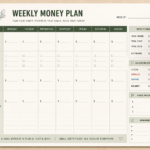

Most budgets fail because they’re built on good intentions instead of a system. Zero-based budgeting is different — it’s the method used by some of the world’s largest companies to eliminate waste, and it works just as well for your personal finances. The Consumer Financial Protection Bureau consistently finds that people with a written spending plan accumulate significantly more savings than those without one. Here’s how to build yours.
This guide will show you exactly how zero-based budgeting works, how to set one up from scratch, and how real people use it to pay off debt, build savings, and stop living paycheck to paycheck — with actual numbers.

Zero-Based Budgeting Checklist: Your First Month
Use this checklist to set up your first zero-based budget this month. Each step takes less than 10 minutes on its own — do them across 3 days and you’ll have your first complete zero-based budget ready before the month starts.
Why it works: BLS Consumer Expenditure data shows the average household spends over $6,000 per month — but most people can only account for about half of that in detail. Zero-based budgeting closes that gap by giving every dollar a name before you spend it.
| Step | Action | Time Needed | Done? |
|---|---|---|---|
| 1 | Write down your exact take-home income this month | 2 minutes | ☐ |
| 2 | Pull up last 3 months of bank statements | 5 minutes | ☐ |
| 3 | List every expense category you had last month | 15 minutes | ☐ |
| 4 | Assign a dollar amount to each category | 10 minutes | ☐ |
| 5 | Subtract all categories from income — check for zero | 5 minutes | ☐ |
| 6 | Cut or reallocate until income − expenses = $0 | 10 minutes | ☐ |
| 7 | Set up automatic savings transfer for payday | 5 minutes | ☐ |
| 8 | Schedule a weekly 5-minute tracking check-in | 2 minutes | ☐ |
Once you’re tracking spending consistently, link your zero-based budget to your Net Worth Calculator to see how your monthly discipline translates into long-term wealth building.
Related resources: best budgeting apps in 2026.
Disclaimer: This article is for informational purposes only and does not constitute financial advice. Always consult a qualified professional for personalised financial guidance.
What Is Zero-Based Budgeting?
Zero-based budgeting (ZBB) is a method where you start from zero each month and justify every expense before allocating money to it. Every dollar of income is assigned to a category — bills, groceries, savings, debt, fun money — until your budget equals zero. You’re not spending everything; you’re telling every dollar exactly where to go.
The term was popularised by financial author Dave Ramsey, but the concept is simple: income − all budget categories = $0.
| Budget Method | How It Works | Control Level | Best For |
|---|---|---|---|
| Zero-Based | Every dollar assigned a job; income − expenses = $0 | ⭐⭐⭐⭐⭐ Maximum | Paying off debt, tight budgets, gaining full control |
| 50/30/20 Rule | 50% needs, 30% wants, 20% savings | ⭐⭐⭐ Moderate | Beginners wanting simplicity |
| Pay Yourself First | Save first, spend the rest | ⭐⭐ Low | People who struggle to save |
| Envelope Method | Cash in envelopes per category | ⭐⭐⭐⭐ High | Curbing overspending on variable costs |
| No Budget | Spend freely, check balance occasionally | ⭐ None | Nobody — this is how you end up broke |
How Zero-Based Budgeting Works: Step by Step
Step 1: Write Down Your Total Monthly Income
Start with your actual take-home pay — not gross salary. Include every source: main job, side hustle, freelance income, benefits. If your income varies, use the lowest month from the last three as your baseline. Always budget conservatively.
Real example: Sarah earns $3,200/month take-home from her job, plus $300/month from freelancing. She budgets on $3,200 and treats the $300 as bonus savings when it arrives.
Step 2: List Every Single Expense
Every expense gets its own line — not just bills, but haircuts, birthday gifts, Netflix, even the monthly $4.99 app you forgot about. Go through your last 3 months of bank statements and find every recurring cost. People typically find $200–$400 in expenses they’d forgotten about.
Step 3: Subtract Expenses from Income Until You Hit Zero
Keep subtracting categories until your income minus all allocations equals $0. If you have money left over, assign it somewhere — extra debt payment, savings, or an emergency fund contribution. If you’re in the negative, cut something until you balance.
Step 4: Track Every Spend Throughout the Month
Zero-based budgeting only works if you track in real time. When you spend $47 on groceries, subtract it from your grocery category immediately. Use an app (YNAB, EveryDollar) or a spreadsheet — but you must check weekly at minimum.
Step 5: Adjust and Rebuild Each Month
Every month is different. In December, add a gifts category. In summer, add a travel category. Rebuild your zero-based budget from scratch each month — don’t just copy last month’s. This is what makes it powerful: you intentionally re-evaluate every line.
Zero-Based Budgeting Example: Real Numbers
Here’s what a real zero-based budget looks like for a single person earning $3,500/month take-home:
| Category | Monthly Budget | Notes |
|---|---|---|
| Rent | $1,100 | Fixed — first priority |
| Groceries | $280 | Meal prepped — down from $420 |
| Transport (car + fuel) | $180 | Car payment + gas |
| Utilities + Phone | $145 | Electric, water, mobile |
| Insurance | $95 | Car + renters |
| Subscriptions | $45 | Netflix, Spotify — cancelled 3 others |
| Dining Out | $80 | Down from $240 — biggest cut |
| Personal Care | $40 | Haircut, toiletries |
| Clothing | $30 | Only necessities this month |
| Fun Money | $75 | Movies, hobbies — non-negotiable |
| Emergency Fund | $200 | Building to $6,000 target |
| Debt Extra Payment | $150 | Above minimum on credit card |
| Sinking Funds | $80 | Car repairs, gifts, medical |
| TOTAL | $3,500 | = $0 remaining ✅ |
Notice that “fun money” is a line item — this is intentional. A zero-based budget that has zero enjoyment fails within two weeks. Budget for fun so you don’t feel deprived.
Zero-Based Budgeting vs 50/30/20: Which Is Better?
| Criteria | Zero-Based Budget | 50/30/20 Rule |
|---|---|---|
| Control over spending | ✅ Very high — every dollar tracked | ⚠️ Moderate — broad categories only |
| Time to set up | ❌ 30–60 min per month | ✅ 5–10 min per month |
| Best for debt payoff | ✅ Yes — you find hidden money | ⚠️ Only if disciplined |
| Best for beginners | ⚠️ Steep learning curve | ✅ Very beginner-friendly |
| Handles irregular income | ✅ Yes — rebuild each month | ⚠️ Tricky with variable income |
| Psychological impact | ✅ Highly intentional, empowering | ✅ Simple, low stress |
Verdict: If you have debt to pay off or want maximum control, zero-based budgeting wins. If you want something quick and simple to start with, the 50/30/20 rule is the better starting point.
The Biggest Mistake People Make With Zero-Based Budgeting
The single most common failure: forgetting irregular expenses. Annual subscriptions, car registrations, medical co-pays, holiday gifts, back-to-school shopping — these are predictable but not monthly. If they’re not in your zero-based budget, they’ll blow it up the moment they appear.
The fix: sinking funds. Set aside $30–$80/month into sub-categories for irregular costs so they never catch you off guard. If you know Christmas costs you $600, save $50/month starting in January.
| Common Budget-Blowing Expense | Average Annual Cost | Monthly Sinking Fund |
|---|---|---|
| Car maintenance / tyres | $800–$1,500 | $65–$125/month |
| Holiday gifts | $500–$1,000 | $42–$83/month |
| Medical / dental (out-of-pocket) | $400–$800 | $33–$67/month |
| Annual subscriptions (Amazon, etc.) | $200–$400 | $17–$33/month |
| Clothing (seasonal) | $300–$600 | $25–$50/month |
| Home repairs / appliances | $500–$2,000 | $42–$167/month |
Is Zero-Based Budgeting Right for You?
Zero-based budgeting is ideal if you:
- Have debt you’re actively trying to pay off
- Consistently run out of money before month-end without knowing why
- Want to find every possible dollar to redirect toward a goal
- Earn a variable income and need structure around uncertainty
- Have tried simpler budgets and found they don’t give you enough detail
It’s probably not for you if you want a quick, low-effort system. In that case, start with our beginner’s budgeting guide and the 50/30/20 rule first.
Best Apps for Zero-Based Budgeting in 2026
| App | Method | Cost | Best For |
|---|---|---|---|
| YNAB (You Need a Budget) | True zero-based budgeting | $14.99/month or $99/year | Serious budgeters, debt payoff |
| EveryDollar | Zero-based (Dave Ramsey method) | Free (basic) / $17.99/month (Plus) | Beginners to zero-based budgeting |
| Google Sheets | Custom zero-based template | Free | DIY budgeters who want full control |
| Monarch Money | Flexible budgeting including ZBB | $14.99/month | Couples, visual budgeters |
| Goodbudget | Digital envelope + zero-based | Free (basic) / $10/month (Plus) | Couples sharing a budget |

Use our free Savings Calculator to see exactly how the money you free up through zero-based budgeting compounds over time — the results are often surprising. Once you’ve got your budget working, use our Debt Payoff Calculator to model exactly when you’ll be debt-free with your new monthly surplus.
Zero-Based Budgeting: The Bottom Line
Zero-based budgeting is the most intentional money system available. It takes more time than simpler methods, but it finds money other approaches miss. People who commit to zero-based budgeting for 3 months consistently report paying off more debt, saving more, and — counterintuitively — feeling less stressed about money than before.
Start this month. Write down your income, subtract every expense until you hit zero, and track it weekly. By month 3, your zero-based budget will be running almost on autopilot.
Ready to take the next step? Read our guide on how to get out of debt fast — zero-based budgeting is the engine that makes it possible.
Zero-Based Budgeting With an Irregular Income: Exactly How to Do It
Most budgeting guides assume you earn the same amount each month. If you’re a freelancer, contractor, server, commission-based employee, or gig worker, that’s not your reality. Here’s how zero-based budgeting works specifically for variable income — and why it actually works better than fixed-income budgeting for unpredictable earners.
The baseline method: Look at your last 6 months of income. Take the lowest month. That is your baseline budget income for every month. Build your zero-based budget entirely around that number. When months are better, assign every extra dollar immediately to a priority list: emergency fund first, then debt, then sinking funds, then savings goals.
| Month | Income | Budget Based On | Extra to Assign |
|---|---|---|---|
| January | $2,800 | $2,800 (baseline) | $0 |
| February | $3,500 | $2,800 (baseline) | $700 → emergency fund |
| March | $2,400 | $2,800 (baseline) | -$400 → use buffer savings |
| April | $4,200 | $2,800 (baseline) | $1,400 → $600 debt + $800 savings |
The key is maintaining a 1-month income buffer in a separate account. When you earn more than baseline, the excess goes to the buffer (or a priority goal). When you earn less, you draw from the buffer without touching your budget. Over time, this creates a stable, predictable financial life even from unpredictable income.
Zero-Based Budgeting for Couples: How to Do It Together
Budgeting as a couple adds complexity — two incomes, potentially different spending habits, and the emotional weight of financial transparency. Zero-based budgeting is actually ideal for couples precisely because it forces explicit conversation about every dollar. Nothing is hidden, nothing is assumed.
The monthly budget meeting: Spend 30–45 minutes together on the 1st of each month rebuilding your zero-based budget. Both partners review last month’s actuals, agree on this month’s categories, and sign off on the plan. This one habit eliminates most money arguments in relationships because every decision is made together in advance, not discovered after the fact.
Individual spending categories: Each partner gets their own “fun money” line item — money they can spend on whatever they want without explanation. This non-negotiable category preserves autonomy and prevents the budget from feeling like control rather than collaboration. Even $30–$50/month each is enough to make the system feel fair.
What to Do When Your Zero-Based Budget Doesn’t Balance
The first time most people run a zero-based budget, their expenses exceed their income. This is normal — and it’s actually the most valuable thing the process reveals. Here’s a priority-ordered approach to cutting until your budget balances:
| Cut Priority | Category | Why Cut Here First | Typical Monthly Saving |
|---|---|---|---|
| 1st | Dining out / takeaway | Highest variable expense with most flexibility | $100–$300 |
| 2nd | Subscriptions | Often forgotten, rarely missed when cancelled | $30–$120 |
| 3rd | Entertainment | Many free alternatives exist | $30–$100 |
| 4th | Groceries | Meal planning reduces cost without sacrifice | $50–$200 |
| 5th | Personal care | DIY haircuts, generic brands | $20–$80 |
| Last resort | Fixed bills (insurance, utilities) | Worth calling to negotiate, but harder to cut | $20–$100 |
If you’ve cut everything possible and still can’t balance, the conversation shifts from budgeting to income: a raise, a side hustle, or a structural change in housing or transport costs. Our guide on making extra money from home covers practical options for increasing income.
How Long Does Zero-Based Budgeting Take to Show Results?
This is the most honest section of this guide: zero-based budgeting takes 3 months to learn and 6 months to transform your finances. Month 1 is data collection — you discover where your money actually goes. Month 2 is calibration — your categories get more realistic. Month 3 is when the system starts running smoothly. By month 6, most people have paid off meaningful debt, built a starter emergency fund, or reached a savings milestone they’d been stuck on for years.
The research backs this up. YNAB reports that new users save an average of $600 in their first two months and over $6,000 in their first year. That’s not magic — it’s the compounding effect of seeing exactly where every dollar goes and making deliberate decisions about it.
Use our Compound Interest Calculator to see what finding an extra $200/month through zero-based budgeting could grow into over 10 or 20 years if invested.
Frequently Asked Questions About Zero-Based Budgeting
Below are the most common questions people ask about zero-based budgeting — with straight answers.
Does zero-based budgeting mean I spend all my money?
No. It means every dollar is assigned — including dollars assigned to savings, investments, and emergency funds. Saving $400/month is still $400 assigned to a purpose, making your budget equal zero.
How long does zero-based budgeting take each month?
The first month takes 45–90 minutes to set up. After that, rebuilding each month takes 20–30 minutes plus 5 minutes of weekly tracking.
Can I do zero-based budgeting with irregular income?
Yes — and it works especially well. Budget based on your lowest expected income for the month. When extra income arrives, assign it immediately (debt, savings, or sinking funds).
What’s the difference between zero-based budgeting and the envelope method?
The envelope method is a spending control technique — cash in physical envelopes. Zero-based budgeting is a full financial planning system. You can use envelopes as part of a zero-based budget.
Is YNAB the best app for zero-based budgeting?
YNAB is the gold standard for true zero-based budgeting, but it costs $99/year. EveryDollar is free to start and easier to learn. Google Sheets is completely free and fully customisable.