
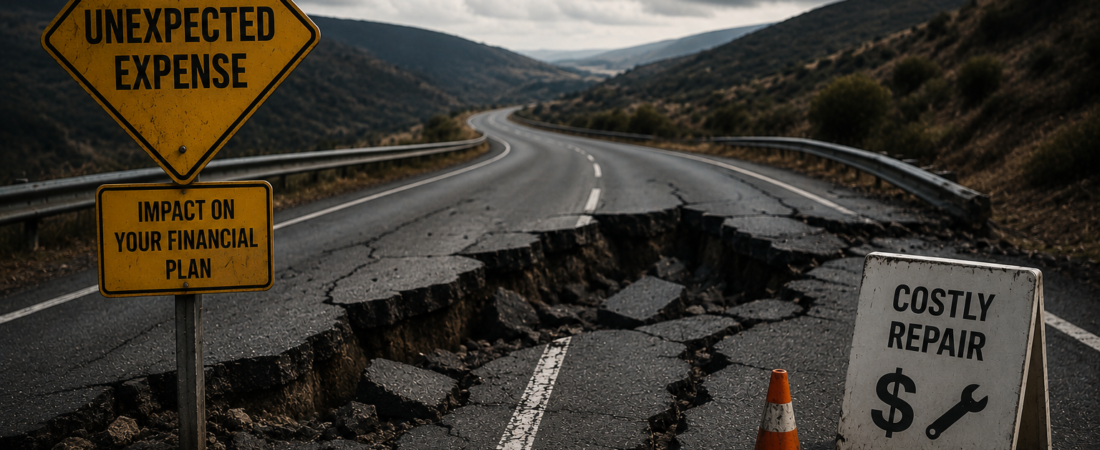
Life is unpredictable. Your car breaks down, your boiler stops working, you lose your job, or an unexpected medical bill lands in your inbox. These things happen to everyone — but the difference between a financial crisis and a minor inconvenience often comes down to one thing: whether or not you have an emergency fund.
An emergency fund is simply a pot of money set aside specifically for unexpected expenses. It’s not for holidays, new gadgets, or impulse purchases. It’s your financial safety net — the thing that stops a bad situation from becoming a disaster.
In this guide, we’ll walk you through exactly what an emergency fund is, how much you need, and how to build one from scratch — even if you’re starting with nothing.
What Is an Emergency Fund and Why Do You Need One?
An emergency fund is a dedicated savings account containing enough money to cover unexpected expenses or a sudden loss of income. Financial experts typically recommend having between three and six months of living expenses saved in your emergency fund.
So why is it so important? Consider these scenarios:
You lose your job unexpectedly. Without an emergency fund, you’d immediately be under pressure to find new income — any income — even if it meant taking the wrong job at the wrong pay. With three to six months of expenses saved, you have breathing room to find the right opportunity.
Your car needs a major repair. Without savings, you’d likely put it on a credit card and pay 20% interest on top. With an emergency fund, you pay cash and move on.
A medical emergency strikes. Healthcare costs can be significant even with insurance. An emergency fund means you can cover the bills without derailing your finances.
Without an emergency fund, every unexpected expense becomes a financial emergency. With one, it’s just an inconvenience.

How Much Should You Save?
The standard advice is three to six months of living expenses. But what does that actually mean in practice?
Start by calculating your essential monthly expenses — the things you’d have to pay even if you lost your income tomorrow. This includes rent or mortgage, utility bills, groceries, transport, insurance, and minimum debt repayments. Leave out discretionary spending like dining out, entertainment, and subscriptions.
For most people, this number falls somewhere between $1,500 and $3,000 per month. So a three-month emergency fund would be $4,500 to $9,000, and a six-month fund would be $9,000 to $18,000.
If those numbers feel overwhelming, don’t panic. You don’t need to save it all at once. The key is to start small and build consistently over time.
The First Milestone: $1,000
If you’re just starting out, forget about three to six months for now. Your first goal is simply to save $1,000. This small but powerful amount is enough to cover most common unexpected expenses — a car repair, a medical bill, a broken appliance — without reaching for a credit card.
Getting to $1,000 is psychologically significant too. Once you’ve hit that first milestone, you’ll have proven to yourself that you can save, and continuing becomes much easier.
Where Should You Keep Your Emergency Fund?
Your emergency fund needs to meet three criteria: it should be safe, accessible, and separate from your everyday spending account.
Safe means it shouldn’t be invested in stocks or anything that can go down in value. Your emergency fund isn’t for growing wealth — it’s for security. Keep it in cash.
Accessible means you should be able to get to the money quickly when you need it. A notice savings account that requires 30-90 days’ notice to access is not appropriate for an emergency fund.
Separate from your everyday account is crucial. If your emergency fund is in the same account as your day-to-day spending, you’ll be tempted to dip into it for non-emergencies. Keep it in a dedicated account — ideally at a different bank to create just enough friction to make you think twice before touching it.
A high-yield savings account is generally the best option. You earn some interest while keeping your money safe and accessible. Shop around for the best rates — even a small difference in interest can add up over time.
How to Build Your Emergency Fund Step by Step
Step 1: Calculate Your Target Amount
Work out your essential monthly expenses and multiply by three for a starter goal and six for a fully funded emergency fund. Write the number down. Having a specific target makes saving feel more achievable than a vague goal of “saving more money.”
Step 2: Open a Dedicated Savings Account
Open a separate savings account specifically for your emergency fund. Name it something meaningful — “Emergency Fund” or “Financial Safety Net” — so you’re reminded of its purpose every time you see it. As mentioned above, a high-yield savings account is ideal.
Step 3: Automate Your Savings
Set up an automatic transfer from your main account to your emergency fund on the day you get paid. Even $50 or $100 per month makes a significant difference over time. By automating the process, you remove the need for willpower — the money moves before you have a chance to spend it.
The key principle here is: pay yourself first. Before you spend money on anything else, move your savings contribution into your emergency fund. Treat it like a non-negotiable bill.

Step 4: Boost Your Fund with Windfalls
Any time you receive unexpected money — a tax refund, a work bonus, a birthday gift, or money from selling unwanted items — put a portion directly into your emergency fund. Even adding $200 or $300 at a time can significantly accelerate your progress.
Step 5: Cut Expenses Temporarily
If you want to build your emergency fund faster, look for expenses you can cut temporarily. Cancel unused subscriptions, cook at home more often, and avoid impulse purchases for a few months. The goal isn’t to deprive yourself forever — it’s to reach your savings target faster so you can relax and enjoy your money more freely.
Step 6: Don’t Touch It (Except for Real Emergencies)
This sounds obvious, but it’s harder than it sounds. Once you start building your emergency fund, you’ll be tempted to use it for things that don’t really qualify as emergencies. A holiday deal, a new phone, or an unexpected but predictable expense (like a car service you knew was coming) don’t count.
A real emergency is something unexpected, necessary, and urgent. If you’re not sure whether something qualifies, it probably doesn’t.
If you do have to use your emergency fund, that’s exactly what it’s there for — don’t feel guilty. Just make rebuilding it your next financial priority.
How Long Will It Take?
The honest answer is: it depends. If you’re saving $200 per month toward a $6,000 emergency fund, it will take 30 months. If you can save $500 per month, it takes 12 months.
The key is to start now and stay consistent. Every month you delay is a month you’re one unexpected expense away from a financial crisis.
Here’s a simple table to illustrate:
- Save $100/month → reach $1,000 in 10 months, $6,000 in 5 years
- Save $200/month → reach $1,000 in 5 months, $6,000 in 2.5 years
- Save $300/month → reach $1,000 in 3.5 months, $6,000 in 20 months
- Save $500/month → reach $1,000 in 2 months, $6,000 in 12 months
What to Do After Your Emergency Fund Is Fully Funded
Once your emergency fund is complete, redirect those monthly savings toward your next financial goal. This could be paying off debt faster, investing for retirement, saving for a house deposit, or building additional wealth.
The emergency fund is the foundation. Once it’s in place, everything else becomes easier — because you’re no longer one unexpected event away from financial chaos.
The Bottom Line
Building an emergency fund isn’t glamorous. It won’t make you rich overnight. But it is one of the most important financial steps you can take — because it protects everything else you’re building.
Start with $1,000. Open a dedicated account, set up an automatic transfer, and make it a priority. The peace of mind that comes from knowing you can handle whatever life throws at you is worth every penny.

Frequently Asked Questions:
What is an emergency fund?
An emergency fund is money set aside specifically for unexpected expenses — things like a medical bill, car repair, or sudden job loss. It acts as a financial buffer that keeps you from going into debt when life throws something unexpected at you.
How much should I have in my emergency fund?
The general recommendation is 3 to 6 months of essential living expenses. If your monthly expenses are $2,000, aim for $6,000 to $12,000. Start with a smaller goal of $1,000 first, then build from there.
Where should I keep my emergency fund?
In a high-yield savings account. It should be easily accessible but separate from your everyday spending account so you’re not tempted to dip into it. Avoid investing it in stocks — you need this money to be available immediately when you need it.
How long does it take to build an emergency fund?
It depends on your income and expenses. If you save $200 a month, you’ll reach $1,000 in 5 months and a full $6,000 fund in 2.5 years. The key is to automate your contributions so you save consistently without thinking about it.
Should I build an emergency fund before paying off debt?
Start with a small emergency fund of $1,000 first, then focus on paying off high-interest debt. Once your high-interest debt is gone, build your full 3-6 month fund. Without any buffer, an unexpected expense will send you straight back into debt.
What counts as a real emergency?
A genuine emergency is something unexpected, necessary, and urgent — a medical expense, essential car repair, or job loss. A sale on your favourite shoes or a holiday is not an emergency. The clearer you are about this distinction, the more effective your fund will be.
Disclaimer: This article is for informational purposes only and does not constitute financial advice.