Learning how to save money on food without coupons is one of the most practical financial skills you can develop. Food is typically the third largest household expense after housing and transport — and unlike rent or utility bills, it’s one of the most controllable costs in your monthly budget.
If you’re trying to take better control of your overall finances, understanding the 50/30/20 budget rule can also help you decide how much of your income should go toward essential expenses like food.
The problem with most food-saving advice is that it either relies heavily on coupons — which take significant time and effort to use effectively — or it’s so vague that it’s impossible to act on. “Eat out less” and “buy generic brands” are fine suggestions, but they don’t tell you the full picture.
This guide covers 13 specific, actionable strategies to save money on food without coupons — strategies that can realistically reduce your monthly food bill by 20-40% starting with your very next shop.
Why Food Is the Perfect Expense to Target
Unlike fixed expenses like rent or insurance, food spending is highly flexible. You need to eat — but you have enormous control over what you eat, where you buy it, and how much you spend doing so.
The average American household spends approximately $400-600 per month on groceries. For many people, this figure is significantly higher once dining out, takeaways, and convenience food are factored in. Even a 25% reduction in food spending frees up $100-150 per month — money that could go toward your emergency fund, debt repayment, or investments.
And crucially, reducing your food bill doesn’t have to mean eating worse. With the right strategies, you can eat nutritiously and enjoyably while spending significantly less.
Strategy 1: Plan Your Meals Before You Shop
Meal planning is the single most effective strategy for reducing food costs — and it requires no coupons, no special apps, and no significant time investment once you’ve built the habit.
The process is simple: before you go shopping each week, decide what you’re going to eat for every meal. Write a shopping list based only on the ingredients you need for those specific meals, checking what you already have at home first.
The result is that you buy exactly what you need and nothing more. No random items thrown in the trolley. No ingredients bought for recipes you never make. No food going off in the fridge because you forgot it was there.
Meal planning also dramatically reduces the temptation to order takeaway on a weekday evening — because you already have a plan and the ingredients to execute it.
Strategy 2: Shop With a Strict List
A shopping list is only useful if you stick to it. Walking into a supermarket without a list — or with a list you ignore — is one of the most reliable ways to overspend on food.
Supermarkets are expertly designed to encourage unplanned purchases. Eye-level products are the most profitable. End-of-aisle displays create artificial urgency. Oversized trolleys make your shop feel smaller than it is. The solution is simple: write your list, organise it by section of the shop, and buy only what’s on it.
A useful rule: if it’s not on the list, it doesn’t go in the trolley. No exceptions. This single habit can save $20-50 per shop for most people.
Strategy 3: Switch to Own-Brand Products
Supermarket own-brand products are typically 30-50% cheaper than branded equivalents — and in most cases, the quality difference is minimal or nonexistent. Many own-brand products are made in the same factories as their branded counterparts, with only the packaging changed.
Start by switching products where you’re unlikely to notice a difference: pasta, rice, tinned tomatoes, flour, sugar, oil, dairy basics, and cleaning products. Most people find that they genuinely can’t tell the difference — and the savings compound quickly across a full weekly shop.
Strategy 4: Reduce Your Meat Consumption
Meat is consistently the most expensive item in most grocery shops. Reducing your meat consumption — even by two or three meals per week — can generate significant savings without requiring you to become vegetarian.
Replace meat with plant-based proteins that are significantly cheaper and highly nutritious: lentils, chickpeas, black beans, kidney beans, and eggs. A bag of dried lentils costs a fraction of the price of chicken breast and provides multiple meals.
When you do buy meat, cheaper cuts — chicken thighs instead of breasts, pork shoulder instead of loin, beef mince instead of steak — are often just as flavourful when cooked correctly, particularly in slow-cooked dishes, stews, and curries.
Strategy 5: Buy Frozen Vegetables Instead of Fresh
Frozen vegetables are nutritionally comparable to fresh — in some cases superior, since they’re frozen at peak ripeness rather than picked early for transport. They’re also significantly cheaper and generate zero food waste, since you use exactly what you need and return the rest to the freezer.
Switching from fresh to frozen vegetables for everyday cooking — keeping fresh only for salads or dishes where texture matters — can meaningfully reduce your weekly food bill without any sacrifice in nutritional quality.
Strategy 6: Cook in Bulk and Freeze Portions
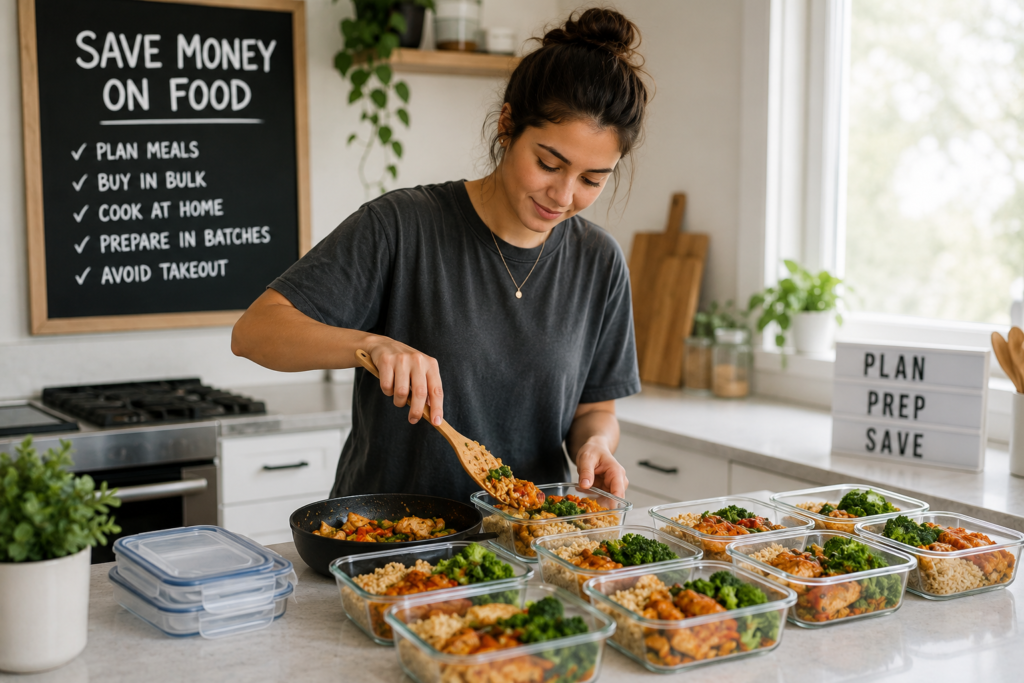
Batch cooking is one of the most powerful food cost reduction strategies available. The principle is simple: cook large quantities of staple foods and meals at once, then freeze individual portions for later use.
This approach saves money in several ways. Buying ingredients in larger quantities is almost always cheaper per unit. Cooking in bulk uses energy more efficiently than cooking multiple small meals. And having ready-made frozen meals eliminates the weekday temptation to order takeaway when you’re tired and don’t want to cook.
Dedicate a few hours on Sunday to cooking large batches of rice, lentil soup, pasta sauce, curry, or chilli. Divide into individual portions, label with the date, and freeze. You’ll have a week’s worth of ready meals that cost a fraction of their restaurant or takeaway equivalents.
Strategy 7: Shop at Discount Supermarkets
If you’re not already shopping at discount supermarkets like Aldi or Lidl, you’re likely paying significantly more than necessary for your weekly groceries. These stores consistently offer comparable quality to mainstream supermarkets at 20-30% lower prices overall.
Many people are surprised by the quality when they first switch. The range is more limited than mainstream supermarkets, but for everyday staples — produce, dairy, meat, dry goods — discount supermarkets are hard to beat on value.
If switching entirely feels too dramatic, try doing your main shop at a discount supermarket and buying only specific branded items you genuinely prefer elsewhere. The hybrid approach still generates significant savings.
Strategy 8: Use the “First In, First Out” Rule
Food waste is one of the most significant and least visible drains on a food budget. The average household throws away a substantial amount of food every week — food that was bought, paid for, and never eaten.
The “first in, first out” rule is simple: when you unpack new shopping, move older items to the front of the fridge and cupboards so they get used before newer items. This prevents food from being forgotten at the back and going to waste.
Combine this with a weekly “use it up” meal — one dinner per week where you cook whatever needs to be used rather than following a recipe — and food waste drops dramatically.
Strategy 9: Understand Date Labels
Many people throw away perfectly good food because they misunderstand date labels. There are two types of date labels with very different meanings:
“Best before” dates relate to quality, not safety. Food past its best before date may have slightly degraded in quality but is generally safe to eat. Bread, pasta, rice, tinned goods, and many other products are fine to consume after their best before date.
“Use by” dates relate to safety. These should be respected — food past its use by date may be unsafe to eat regardless of how it looks or smells.
Understanding this distinction means you’ll throw away significantly less food, saving money without any risk to your health.
Strategy 10: Grow Some of Your Own Food
You don’t need a large garden or significant investment to grow some of your own food. A windowsill, balcony, or small outdoor space is sufficient for growing herbs, salad leaves, tomatoes, and other high-value items that are expensive to buy fresh but easy to grow at home.
Fresh herbs in particular are disproportionately expensive at supermarkets. A pot of basil, mint, or chives on a windowsill costs a few dollars and provides a continuous supply of fresh herbs for months — far cheaper than buying pre-packaged herbs every week.
Strategy 11: Buy in Bulk for Non-Perishables
For items that don’t spoil — pasta, rice, lentils, tinned goods, cooking oil, cleaning products — buying in larger quantities almost always reduces the cost per unit significantly.
The savings from bulk buying non-perishables can be substantial over time. A 5kg bag of rice costs significantly less per kilogram than a 1kg bag. A multipack of tinned tomatoes costs less per tin than buying individually.
The key is only to bulk-buy items you know you’ll definitely use within a reasonable timeframe. Buying large quantities of something that sits unused in your cupboard isn’t a saving — it’s just deferred spending with added storage problems.
Strategy 12: Prepare Lunches at Home
Buying lunch at work or school is one of the most significant and easily overlooked food costs. A bought lunch — even a relatively modest sandwich, drink, and snack — typically costs $8-12. Preparing the same lunch at home costs $1-3.
For someone buying lunch five days a week, switching to homemade lunches saves $25-45 per week — $1,300-2,340 per year. This is one of the single highest-impact food cost reductions available to most people.
Batch-preparing lunches at the start of the week — a large batch of soup, a grain salad, or simply assembling five days of sandwiches on Sunday evening — removes the daily friction of packing lunch and makes it much easier to maintain the habit.
Strategy 13: Set a Weekly Food Budget and Track It
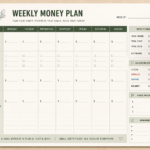
All the strategies above work better when combined with a clear weekly food budget. Without a specific number to aim for, it’s easy to let food spending drift upward without noticing.
If your income arrives every week rather than once or twice a month, you may also find this guide on how to budget when you get paid weekly helpful.
Calculate how much you currently spend on food per week by reviewing your bank statements for the last month. Set a target to reduce this by 15-20% over the next month. Track your spending against this target each week.
Having a concrete number creates accountability and makes it much easier to make conscious decisions in the moment — whether to buy that extra item, whether to order takeaway, whether to choose the branded or own-brand product.
Frequently Asked Questions:
How much can I realistically save on food without coupons?
Most people can reduce their food bill by 20-40% by implementing the strategies in this guide consistently. For someone currently spending $500 per month on food, that’s $100-200 in monthly savings — achieved without clipping a single coupon.
Is it possible to eat healthily while spending less on food?
Absolutely. Many of the cheapest foods — lentils, beans, eggs, oats, frozen vegetables, and seasonal produce — are also among the most nutritious. Eating well on a budget is entirely achievable with the right approach.
How long does meal planning actually take?
Once you’ve built the habit, weekly meal planning takes 15-20 minutes. The time saved on impulse shopping decisions and the money saved on wasted food more than compensate for this small upfront investment.
Should I shop at multiple supermarkets to get the best prices?
For most people, the time and transport cost of shopping at multiple supermarkets outweighs the savings. A better approach is to choose one good-value supermarket — ideally a discount retailer like Aldi or Lidl — and shop there consistently, supplementing with occasional purchases from other stores for specific items.
Does buying in bulk always save money?
Not always. Bulk buying saves money only on items you’ll definitely use before they expire and that have a lower unit price in larger quantities. Always check the price per unit rather than the overall price when comparing pack sizes.
Is frozen food as nutritious as fresh?
In most cases, yes. Frozen vegetables are typically frozen within hours of harvest, preserving their nutritional content. In some cases, frozen vegetables are more nutritious than fresh ones that have spent days in transit and on supermarket shelves.
Disclaimer: This article is for informational purposes only and does not constitute financial advice.